Florida's 2026 No-Fault Repeal: How the Death of PIP Changes Your Claims Forever

By Joe, United Car Insurance Personal PA on 2026-02-19

Florida 2026 Survival Audit: 5 Critical Rules

  • Rule 1 The PIP Sunset: As of July 1, 2026, PIP is dead. You no longer have automatic $10,000 medical coverage regardless of fault. If you're hit, you must prove the other driver's guilt to get paid.
  • Rule 2 Mandatory MBI: Florida finally joins the rest of the nation by requiring Bodily Injury (BI) liability of at least $25,000/$50,000. No more "Property Damage Only" legal driving.
  • Rule 3 The MedPay Bridge: Carriers will heavily push "MedPay" as a PIP replacement. While optional, it's your only safety net for immediate ER bills while the legal battle over "fault" rages on.
  • Rule 4 Bad Faith Reform: The 2026 rules also tighten "Bad Faith" lawsuits against insurers. This means settlements might be faster, but also potentially lower if you don't have a dashcam.
  • Rule 5 Uninsured Surge: Experts predict a 15% spike in uninsured drivers in 2026 as premiums rise. Carry "Stacked UM" or risk being hit by someone with zero assets.

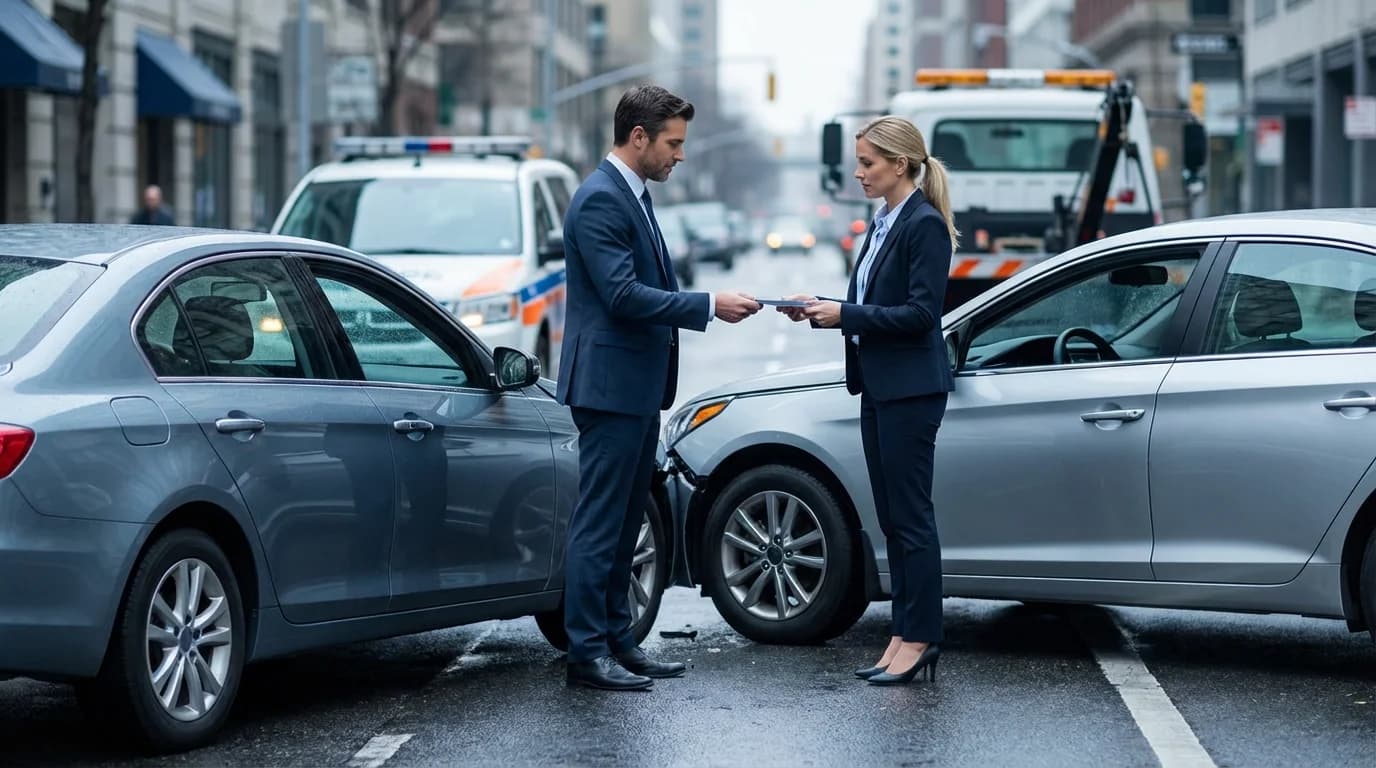
Florida drivers have lived in the "No-Fault" bubble for decades. You get in a crash, your own insurance pays the first $10,000 of medical bills, and everyone goes home. But on July 1, 2026, that bubble bursts. The repeal of the Florida Motor Vehicle No-Fault Law turns the Sunshine State into an "At-Fault" jurisdiction, triggering the biggest insurance chaos since the 1970s.

"The 2026 repeal is a double-edged sword: You're finally required to have liability to protect others, but you lose the medical 'armor' that protected yourself."

— joe, United Car Insurance PA

Chapter 1: The Death of the $10,000 Buffer

For 50 years, PIP was Florida's "speedy" solution. It didn't matter if you were at fault or not; your insurance company cut a check for your ER visit. In 2026, that safety net is gone. If you are injured in a multi-car pileup on I-95, you will now have to wait for insurance adjusters to argue over **comparative negligence** before a single dollar is allocated for your physical therapy.

The 2026 FL Claims Pivot

How the process changes on July 1, 2026

Action Item The "Old" PIP Way The "New" At-Fault Way
Medical Bills Paid by YOUR insurer immediately Paid by AT-FAULT insurer after probe
Deductibles Usually $1,000 for PIP N/A (Full liability recovery)
Legal Right to Sue Only for "Permanent Injury" Unlimited for any damage/injury

Chapter 2: The New BI Minimums ($25k/$50k)

Florida used to be the only state where you could legally drive with zero bodily injury coverage (unless you were in an accident previously). That era ends in 2026. The new law mandates **$25,000 per person** and **$50,000 per accident** for bodily injury.

This is great for victims, but it means thousands of "Minimum" policies will see their monthly costs spike by $30 to $60 just to meet the new legal floor. If you're a high-risk driver in Miami or Orlando, your "Survive 2026" strategy must include a deep audit of these new mandates before June 30th.

Chapter 3: Proving Fault (The Dashcam Era)

In an At-Fault system, your word is worth nothing if you don't have proof. In 2026, insurance adjusters will be using "AI-Fault Analysis" tools that scan photos and dashcam footage to assign percentages of blame. Even a 10% "shared fault" ruling could cost you thousands in medical reimbursements.

This is why we've added a Dashcam Evidence Guide to our 2026 toolkit. Without video, you are at the mercy of the other driver's "interpretation" of that yellow light in Tampa.

Chapter 4: MedPay: The Essential Bridge

The most dangerous gap in the 2026 Florida reform is the "Medical Waiting Room." If you're hurt, doctors want payment now. They don't want to wait 6 months for a lawsuit to settle. **Medical Payments Coverage (MedPay)** is the solution. It acts like "Mini-PIP," paying for your immediate clinic visits while the liability teams fight over blame.

The 2026 MedPay Secret

Carriers aren't required to offer MedPay, but the smart ones will. Insist on at least $5,000 in MedPay coverage. It's the only way to ensure your credit score doesn't tank from unpaid hospital bills while you're waiting for your 2026 settlement check.

Chapter 5: The 2026 Premium Surge Forecast

Let's be blunt: premiums are going up. The shift from "PIP Only" to "Full Liability" is expensive for insurers. We've projected the 2026 surge across Florida's major metro areas.

Miami-Dade

+18% Surge

Driven by high litigation rates

Orlando / Orange

+12% Surge

Driven by increased tourist accidents

Jacksonville / Duval

+9% Surge

Driven by new statewide BI mandates

Chapter 6: Why 'Stacked UM' is Required for 2026 Survival

In 2026, the Uninsured Motorist (UM) problem in Florida will reach a tipping point. With the new mandatory BI limits, some drivers will simply stop buying insurance altogether. If you are hit by an uninsured driver in the post-No-Fault era, and you don't have UM coverage, you have **nothing**. No PIP buffer, no liability recovery.

Chapter 8: The Clinic Chaos (How Medical Providers Change in 2026)

Medical clinics in Florida—especially chiropractors and physical therapists—have survived on "PIP Billing" for decades. In 2026, the direct-pay tap is turned off. Clinics will now have to file **Letters of Protection (LOPs)**, which are essentially liens against your eventual legal settlement.

Warning: An LOP means the doctor is gambling on your case's success. If you lose your "Fault" argument in 2026, you are still personally responsible for those medical bills. This is the hidden financial trap of the At-Fault era.

Chapter 9: The 51% Rule (Modified Comparative Fault)

Florida recently shifted to a **Modified Comparative Fault** system, which takes on ultimate importance in 2026. If a jury finds you are more than 50% responsible for the accident, you recover **zero** from the other driver. In the old No-Fault days, you'd still get your $10,000 PIP. In 2026, being 51% at fault means you are footing your own medical and repair bills entirely.

Chapter 10: The Bad Faith Shield (HB 837 Interaction)

Recent Florida legislation (HB 837) has made it harder to sue insurance companies for "Bad Faith." In 2026, this means your insurer has a stronger legal shield if they delay your claim. To counter this, Florida drivers must be more aggressive in gathering evidence at the scene. "Waiting for the adjuster" is no longer a viable strategy for a 2026 recovery.

The 2026 Evidence 'Golden Ratio'

Mandatory Documentation
  • 📸 12+ Wide-angle photos of the intersection
  • 💾 Downloaded Dashcam telematics (within 2 hours)
  • 📝 Recorded witness statements on-site
Post-Crash Actions
  • 🏥 ER visit even for "minor" neck stiffness
  • 📞 Immediate call to an At-Fault specialist

Chapter 11: The Tourist Trap (Visiting Disney in 2026)

If you're visiting Florida from a No-Fault state (like New York or Michigan) in late 2026, your "Out-of-State Coverage" might be insufficient. Florida's new At-Fault mandates expect you to have BI limits that match the state minimum. If you hit a Floridian and your home-state policy only has $15k in BI, you are personally on the hook for the remaining $10k per the new mandatory minimum laws.

Chapter 12: Urban Warfare (Miami, Tampa, Orlando)

Traffic density in Florida's "Big Three" metros means that 2026 premiums will see a tiered surge. Miami-Dade, notoriously known for insurance fraud, will see the highest spike as insurers bake in the cost of defending thousands of new "At-Fault" jury trials.

Chapter 13: The 'Stacked' Victory (Your Uninsured Motorist Shield)

In 2026, **Stacked Uninsured Motorist (UM)** coverage is no longer a luxury; it's a structural requirement for safety. If you have two cars, stacking your coverage allows you to combine your limits. With Florida's high rate of hit-and-runs, having a "Stacked" $50k/$100k UM policy is the only real way to replace the lost PIP medical buffer.

Chapter 15: The 'Non-Owner' Loophole (Reinstatement on a Budget)

If the July 1, 2026 deadline hits and you find yourself "priced out" of a standard car insurance policy, there is a legal backup plan. A **Non-Owner policy** allows you to satisfy the state's new $25k/$50k Bodily Injury mandate without actually owning a vehicle.

This is particularly useful for Florida drivers who had their licenses suspended under the old No-Fault system. To get reinstated in 2026, you will need to prove you have a liability shield. A Non-Owner SR-22/FR-44 Policy can save you up to 60% compared to a full owner's policy, keeping your license valid while you navigate the new insurance economy.

Chapter 16: The Rideshare Collision (Uber & Lyft in 2026)

Florida's 2026 repeal creates a massive "Coverage Gap" for rideshare drivers. Under the old rules, PIP covered your medical bills even if you were "off-app" between rides. In the new At-Fault era, if you're in **Period 1** (app on, but no rider) and you get hit by an uninsured driver, you have no PIP to save you.

Rideshare Recommendation

Rideshare endorsements in Florida will be rebranded in 2026. You *must* add a specific BI liability endorsement to your personal policy to cover the gap when the Uber app is on but the commercial insurance hasn't fully kicked in. Failure to do so is a common cause for policy non-renewal in the new regulatory climate.

Chapter 17: Rural vs. Urban Gaps (Tallahassee vs. Miami)

The "At-Fault" transition will be noticeably smoother for drivers in rural counties like **Liberty** or **Jefferson**. Because these areas have fewer accidents and lower litigation rates, the "Mandatory BI" hike will be partially offset by the removal of the PIP premium.

However, in **Miami-Dade** and **Broward**, the sheer volume of "Shared Fault" litigations will keep premiums high. In these urban hubs, the 2026 reform isn't a cost-saver—it's a technical evolution that requires every driver to be their own defense attorney.

Chapter 18: The Teen Driver Surge (Why College Students Are at Risk)

If you have a high-school or college-aged driver on your Florida policy, 2026 is going to be painful. Teens are statistically more likely to be found "At Fault" in light-controlled intersections. Without PIP to handle their minor ER visits, family premiums for teen drivers are expected to rise by an additional 15% specifically to cover the new BI liability exposure.

Chapter 19: The Legislative Blueprint (The Ghost of SB 54)

To understand the 2026 repeal, we have to look at the failed attempt of **SB 54** in 2021. That bill was vetoed because of fears it would raise rates on low-income drivers. The 2026 implementation is a more refined version that tries to balance consumer protection with market stability.

The Florida Senate finally realized that being a "No-Fault" state in a "High-Litigation" world was unsustainable. The 2026 rules align Florida with the majority of the U.S., forcing a "Standard of Care" that was previously optional.

Chapter 21: The UM Stacking Battle (Your Final 2026 Shield)

In 2026, the Uninsured Motorist (UM) problem in Florida will reach a tipping point. With the new mandatory BI limits, some drivers will simply stop buying insurance altogether because it's too expensive. If you are hit by an uninsured driver in the post-No-Fault era, and you don't have UM coverage, you have **nothing**.

United Strategy: Always choose **Stacked UM**. In Florida, this allow you to add your UM limits across multiple cars. If you have two cars with $25k each, stacking them gives you a 50k shield. In 2026, this is the only way to replace the lost $10k PIP buffer with a meaningful amount of medical protection.

Chapter 22: The 2026 Fraud Audit (Denial Tactics)

Because the At-Fault system depends on subjective investigations, Florida insurers will be hiring thousands of new "SIU" (Special Investigation Unit) adjusters in 2026. Their goal? To find any reason to assign YOU a percentage of fault. They will check your social media, your cell phone records, and your car's black box (EDR) to argue that you contributed to the crash.

Chapter 23: The Snowbird Sunset (Out-of-State Warnings)

If you are a "Snowbird" from New York, New Jersey, or Canada, your home-state policy might not "auto-upgrade" to meet the new 2026 Florida mandates when you cross the border. You must call your northern agent and ensure your Bodily Injury limits meet the 25/50 Florida floor. If you're hit in Florida and your policy is "Below State Minimum," you could face registration suspension both in Florida and your home state.

"The July 1 deadline is a hard reset for Florida mobility. The days of 'Cheap PIP' are over, replaced by the era of 'Mandatory Liability.'"

In 2026, you shouldn't just rely on your insurance company's lawyer. Because the stakes of an "At-Fault" judgment are so high (unlimited liability for non-permanent injuries), you should have a secondary legal audit of any settlement offer.

The Florida 2026 Insurance Dictionary

Bodily Injury (BI)

The portion of your policy that pays for the other person's medical bills and pain if you are found at fault. Mandatory as of July 1, 2026 ($25k/$50k).

PIP (Personal Injury Protection)

The "Old Way." A mandatory $10k medical benefit that covered you regardless of fault. Sunsetted on July 1, 2026.

MedPay

Optional but critical 2026 coverage. It pays your medical bills instantly, acting as a bridge while the 'Fault' investigation is ongoing.

Stacked UM

Uninsured Motorist coverage that "stacks" across multiple vehicles in your household, providing a larger medical shield if you are hit by a driver with zero assets.

Comparative Negligence

The legal doctrine where both drivers can share a percentage of fault (e.g., 20/80). Your payout is reduced by your own percentage of fault.

Letters of Protection (LOP)

A legal agreement between you and a doctor to delay payment until your 'At-Fault' case is settled. High risk if you lose the case.

Master the Florida No-Fault Sunset

Don't let the July 1 deadline catch you without medical protection. Use our Florida 2026 Policy Auditor or read the Full Liability Guide to prepare for the transition.

Expert Analysis Assisted by AI for Legislative Research & 2026 Florida Market Data.

Disclaimer: United Car Insurance is a digital education platform. We are not a licensed insurance carrier in Florida. Consult a licensed FL agent for specific legal advice. (c) 2026 Unified Mobility Media.

Dash cam we trust

REDTIGER 4K Front + Rear Dash Cam

STARVIS 2 sensor clarity, free memory card, fast 5.8GHz WiFi downloads, and 24/7 parking protection—all powered by a safer supercapacitor. Protect your car with reliable footage day or night.

  • • 4K front + 1080p rear with WDR/HDR for balanced day/night detail
  • • 20MB/s WiFi app control to preview, download, and share instantly
  • • 24/7 parking modes (time-lapse + G-sensor) with automatic event lock
  • • Supercapacitor build for heat resistance and longer life

Affiliate link. We may earn a commission at no extra cost to you.

REDTIGER 4K front and rear dash cam with GPS and parking mode

More Expert Reads

Continue the journey with these hand-picked articles.

Understanding Your Car Insurance Policy: The 2026 Mega-Guide

The 2026 insurance policy is no longer just a stack of paper—it's a digital-first legal contract. We deconstruct the new 'Plain English' mandates, decode the digital declarations page, and expose the 'Black Box' exclusions you've likely never heard of.

Joe, United Car Insurance Personal PA2026-02-17

15 Proven Ways to Lower Your Car Insurance Premium (The Definitive 2026 Guide)

The 2026 insurance market is the most expensive in history. Use this 15-step 'Premium Slasher' strategy—including telematics audits, the 'Tech Tax' hedge, and credit-based re-rating—to cut hundreds from your bill without losing protection.

Joe, United Car Insurance Personal PA2026-02-17

What to Do After a Car Accident: The 10-Step Survival Checklist (2026)

The screech of tires, the silence after—panic sets in. Don't freeze. Follow this 10-step accident checklist to protect your safety, your rights, and your insurance claim.

Joe, United Car Insurance Personal PA2026-01-21

Frequently Asked Questions

What is the main change from a 'no-fault' to an 'at-fault' system?

In the current no-fault system, your own PIP coverage pays for your medical expenses regardless of who caused the accident. After July 1, 2026, Florida shifts to an at-fault system where the driver responsible for the crash is liable for the damages, meaning their insurance must cover the injured parties' expenses.

Does this happen automatically on July 1, 2026?

Yes. Your policy will be legally required to meet the new minimums on that date. Most carriers will automatically adjust your coverage and premium at your first renewal after the deadline, but you should check your renewal notice in May 2026 carefully.

What will replace PIP insurance in Florida after 2026?

PIP will be replaced by mandatory Bodily Injury (BI) liability coverage ($25,000 per person and $50,000 per accident) and optional but highly recommended Medical Payments (MedPay) coverage, which acts as a bridge for immediate medical bills.

Can I still sue if I'm more than 50% at fault?

Under Florida's Modified Comparative Fault rules (effective 2026), if you are found more than 50% at fault for an accident, you are barred from recovering any damages from the other driver. This makes dashcam evidence and incident documentation crucial.

How will the repeal of PIP affect my car insurance premiums?

While removing the PIP requirement could lower costs, the new mandatory Bodily Injury minimums are higher than what many Florida drivers currently carry. Experts predict that mid-to-high risk drivers may see a premium increase to account for the increased liability exposure.

Attorney assisting a driver after an accident

Need legal guidance?

Speak with a Lawyer in Minutes

When an accident escalates into legal questions, get instant help from AskALawyerOnCall.com. Their on-demand attorneys can explain liability, settlement offers, and next steps so you can act with confidence.

*Affiliate partner. Speaking with a licensed attorney can help you document evidence, understand your rights, and move your claim forward faster.

Calculate Your Coverage Needs

Use our free tools to find out exactly how much protection you need before you buy.