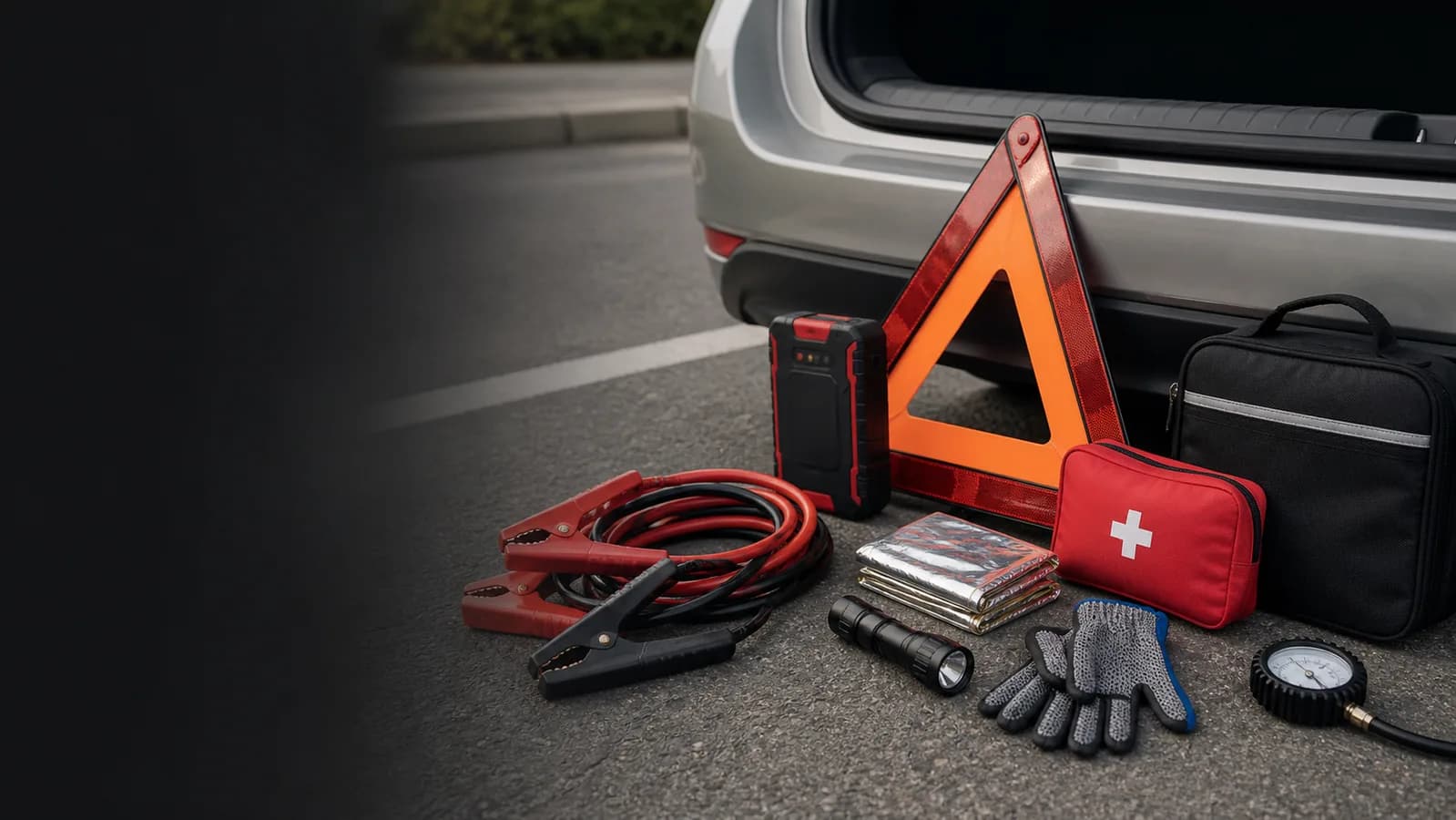
Roadside preparedness
Best Car Emergency Kits: 3 Roadside-Ready Options
A preassembled kit is a useful starting point, not a complete emergency plan. The right choice depends on climate, trip length, vehicle condition, passengers, and whether you can safely use the included tools.
- Published
- Aug 10, 2026
- Reviewed
- Aug 10, 2026 by United Car Insurance Editorial Team
Comparison at a glance
| Product | Best for | Key fit | Important limit | Product link |
|---|---|---|---|---|
| Everlit Survival Car Emergency Kit | A broad all-in-one roadside setup | Air compressor included | Large item count requires inspection | View on Amazon |
| Thrive Roadside Emergency Car Kit | Compact general preparedness | Compact storage | No powered inflator | View on Amazon |
| Justin Case Travel Pro Roadside Kit | Travel-focused roadside basics | Core recovery basics | Verify current roadside-assistance terms | View on Amazon |
Choose by driving situation
The strongest choice depends on how and where the equipment will be used. Start with the situation, then compare features.
| Your situation | Prioritize | Avoid |
|---|---|---|
| Daily urban commute | Visibility, phone power, flashlight, gloves, compact storage | Oversized recovery tools you cannot safely use |
| Long highway trips | Longer-duration lighting, water, blanket, power bank, roadside plan | Storing every critical item in an inaccessible trunk corner |
| Winter driving | Warm layers, traction support, scraper, durable gloves | Leaving heat-sensitive or expired supplies unchecked |
| New or teen driver | Simple labeled compartments and a written call sequence | Complex tools without practice or instructions |
Editorial analysis
A kit should reduce exposure, not encourage risky repairs
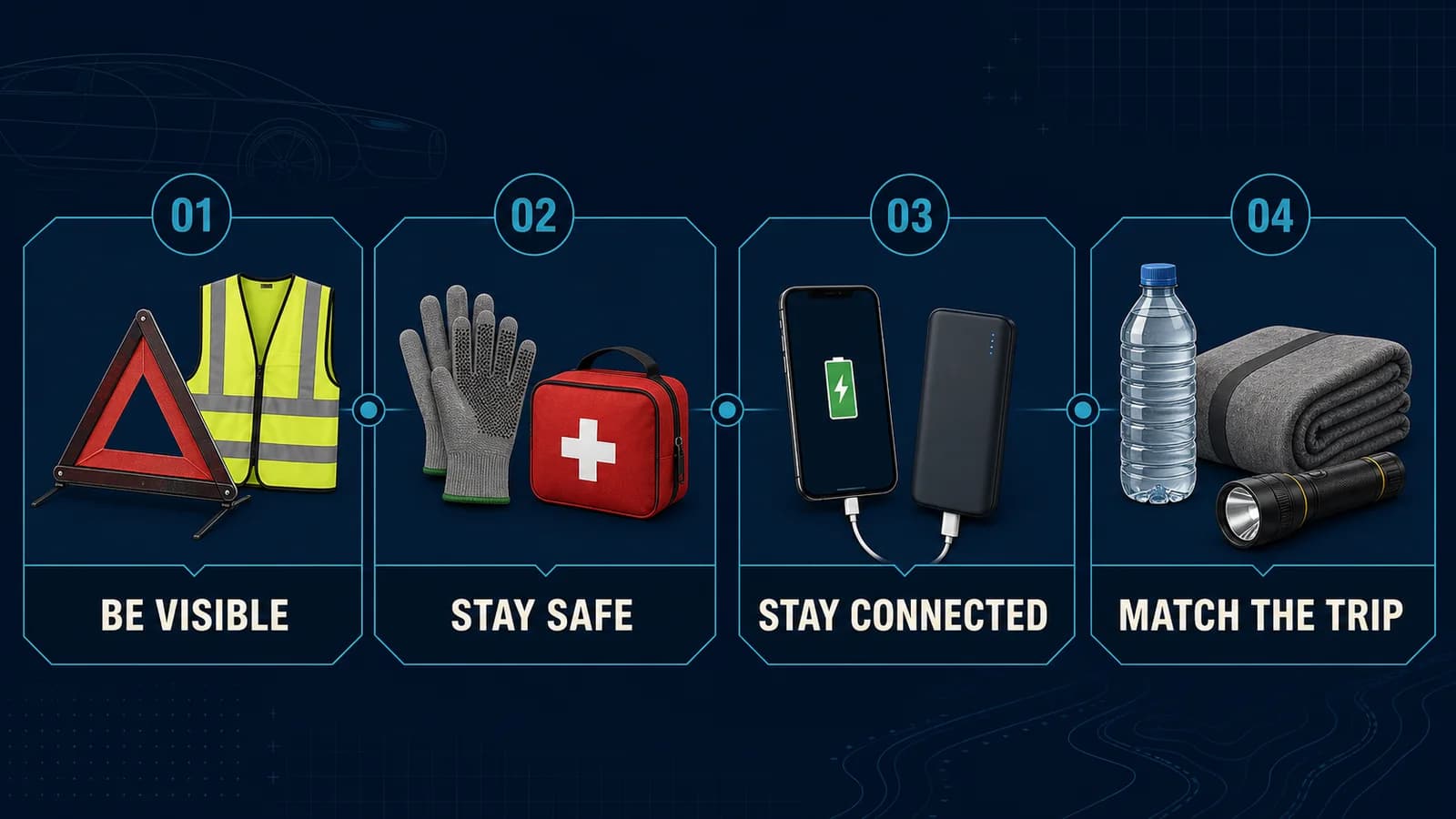
The first job of an emergency kit is to help occupants become visible, move away from traffic when possible, and contact help. A long tool list is less important than a warning device, lighting, gloves, a charged phone, and supplies that are actually accessible.
Preassembled kits often optimize for item count. That can hide thin gloves, short cables, weak flashlights, or first-aid assortments dominated by small bandages. Open the bag on arrival and judge each critical component instead of treating the sealed kit as finished.
Climate and passengers change the answer. Winter routes require warmth and traction planning; hot climates require careful rotation of water and batteries; children, older passengers, pets, and medical needs require personal additions no universal kit can provide.
How we selected these options
We evaluated the products against the job this guide is meant to solve. The list is a decision shortlist, not a claim that one product is universally best.
- Core roadside utility: visibility, lighting, gloves, jumper support, and basic tools.
- First-aid scope: useful basics without presenting the kit as medical treatment.
- Portability: storage footprint and how quickly the bag can be reached.
- Component transparency: whether the listing clearly identifies included items.
- Upgrade path: how easily owners can add climate- and passenger-specific supplies.
Our three practical picks
Pick 1 · A broad all-in-one roadside setup
Everlit Survival Car Emergency Kit
Combines a compact air compressor, first-aid supplies, jumper cables, tow strap, flashlight, and roadside tools.
- Inflation
- Compact compressor included
- Battery support
- Jumper cables included
- Recovery
- Tow strap included
- First aid
- Basic supplies included
Where it fits
- Air compressor included
- Jumper and tow support
- Broad emergency assortment
Limitations to know
- Large item count requires inspection
- Included components may not match every vehicle or climate
Compatibility: Good for drivers who want one base kit and are willing to review and customize it.
Check product on Amazon →Pick 2 · Compact general preparedness
Thrive Roadside Emergency Car Kit
A 104-piece kit with jumper cables, escape hammer, tire gauge, first-aid basics, and smaller roadside items.
- Listed count
- 104 pieces
- Battery support
- Jumper cables included
- Escape
- Hammer included
- Tire check
- Gauge included
Where it fits
- Compact storage
- Escape tool included
- Useful basic assortment
Limitations to know
- No powered inflator
- Small first-aid components are for minor needs only
Compatibility: Fits everyday commuters who already carry a separate inflator or roadside plan.
Check product on Amazon →Pick 3 · Travel-focused roadside basics
Justin Case Travel Pro Roadside Kit
Includes jumper cables, a tow strap, flashlight, gloves, first-aid basics, and listed roadside-assistance support.
- Battery support
- Jumper cables included
- Recovery
- Tow strap included
- Visibility
- Flashlight included
- Hand protection
- Gloves included
Where it fits
- Core recovery basics
- Gloves and lighting
- Travel-friendly organization
Limitations to know
- Verify current roadside-assistance terms
- No single kit replaces professional recovery
Compatibility: Suitable for road trips when paired with personal supplies and a charged phone.
Check product on Amazon →Setup and ownership plan
- 1
Inventory the bag
Lay everything out, compare it with the listing, and remove components you would not use safely.
- 2
Add personal supplies
Include medication, emergency contacts, water, clothing, and passenger-specific items.
- 3
Choose accessible storage
Secure the kit so it does not move, but can still be reached if the trunk is damaged.
- 4
Set a six-month review
Rotate batteries, water, medical items, and seasonal gear twice a year.
Questions to answer before checkout
- Are warning devices reflective and stable?
- How long and heavy are the jumper cables?
- Is the flashlight rechargeable or battery-powered?
- What first-aid items expire?
- Does the bag leave room for personal additions?
Common buying mistakes
- Judging a kit by piece count
- Ignoring cable gauge and length
- Leaving batteries or medication beyond storage limits
- Attempting repairs beside live traffic
Buying checklist
- Match jumper-cable length and capacity to your vehicle.
- Add a reflective vest and warning devices if they are not included.
- Replace expired first-aid items and batteries on a schedule.
- Store the kit where it remains accessible after a rear impact.
- Add water, medication, blankets, and seasonal gear for your route.
Frequently asked questions
What should every car emergency kit include?+
At minimum, consider high-visibility signaling, a flashlight, gloves, basic first aid, a phone power source, and tools appropriate for your vehicle and climate.
How often should I check the kit?+
Review it at least twice a year and before long trips. Replace expired medical items, depleted batteries, damaged tools, and seasonal supplies.
Where should I store an emergency kit?+
Keep it secured and reachable. A trunk organizer works for many vehicles, but consider whether a collision could block access to the trunk.
Do I still need roadside assistance?+
Usually yes. A kit helps with preparation and minor situations; it does not safely solve towing, traffic exposure, major electrical faults, or severe tire damage.
Can I leave water and batteries in a hot car?+
Heat and freezing temperatures can degrade supplies. Follow manufacturer storage instructions and rotate heat-sensitive items regularly.