Car insurance is a topic that affects nearly every driver, yet it remains one of the most confusing and misunderstood financial products. It's a world filled with complex jargon, bewildering options, and the persistent question: "Am I actually covered for what I need?"
Many drivers simply choose the cheapest option or stick with the same provider for years, unsure if their policy truly protects them. This guide is designed to change that. We will demystify the entire landscape of car insurance, transforming you from an uncertain buyer into an empowered, confident decision-maker.
In this guide, we will dissect every component of a policy, explain how your rates are determined, guide you through the shopping process, and prepare you for the unfortunate event of a claim.
This is the last guide you'll ever need to master your car insurance.
Key Takeaways
- ✓ High Limits are Mandatory: In 2026, state minimums no longer cover the cost of modern EVs and medical inflation. Carry at least 100/300/100.
- ✓ Deductible vs. Savings: Raising your deductible to $1,000 can slash 15% off your premium, but only if you have the cash saved.
- ✓ Telematics is the New Standard: Usage-based programs now offer the deepest discounts, reward safe habits in real-time.
- ✓ Shop Annually: Carrier rates are shifting faster than ever. A 20-minute quote check every 12 months is non-negotiable.
💡 2026 Market Update
The insurance landscape in 2026 is dominated by "Extreme Inflation Defense." Repair costs for vehicles with advanced ADAS (Advanced Driver Assistance Systems) have increased by 40% since 2023. Insurers are pricing risk more aggressively—meaning those with clean records and smart coverage choices are seeing the biggest savings gap compared to high-risk drivers.
Chapter 1: The Foundations of Car Insurance
Before we dive into the complexities of different coverages and pricing models, we must first build a solid foundation. Understanding what car insurance is at its core and why it's so critical is the first step toward making informed choices.
What is Car Insurance, Really?
At its most basic level, a car insurance policy is a contract. It's a formal agreement between you (the "policyholder") and an insurance company (the "insurer"). You agree to pay a regular fee, known as the "premium," and in return for your payment, the insurer promises to pay for specific, defined financial losses that you might suffer. It is a system of risk transfer. Instead of facing the potentially catastrophic cost of a major accident on your own-which could include hundreds of thousands of dollars in medical bills and vehicle repairs-you transfer that risk to the insurance company.
Why is Car Insurance Legally Required?
Nearly every state in the U.S. legally mandates that drivers carry a minimum amount of liability insurance. The reason is for public financial protection. If you cause an accident that injures someone or damages their property, you are financially responsible. Without insurance, most people couldn't afford to cover these costs, leaving the victims with a massive financial burden. Mandatory insurance ensures that there is a source of funds to compensate those you might accidentally harm.
Key Terminology You MUST Know
The language of insurance can be a major barrier. Let's define the five most critical terms you will encounter repeatedly:
- Premium: The fixed amount of money you pay to the insurance company to keep your policy active. This can be paid monthly, quarterly, semi-annually, or annually.
- Deductible: The amount of money you must pay out-of-pocket for a claim before your insurance coverage begins to pay. For example, if you have a $500 deductible and your car needs $5,000 in repairs, you pay the first $500, and the insurer covers the remaining $4,500. This only applies to coverages for your own car, like collision and comprehensive.
- Limit: The maximum amount your insurance company will pay for a single claim or accident. Once this limit is reached, you are personally responsible for any remaining costs.
- Claim: A formal request you make to your insurance company for compensation after a covered loss.
- Policyholder: The person who owns the insurance policy.
Chapter 2: Core Coverages - Your Policy's Building Blocks
A car insurance policy isn't a single thing; it's a bundle of individual coverages. Let's break down the essential components that form the backbone of nearly every policy.
Liability Coverage: The Non-Negotiable Foundation
Liability is strictly for "the other guy." It pays for the damage you cause. Without strong limits, your house and savings are at risk if you are sued.
| Coverage | What It Pays For | 2026 Recommended Limit |
|---|---|---|
| Bodily Injury (BI) | Medical bills, lost wages for OTHERS. | $100,000 / $300,000 |
| Property Damage (PD) | Vehicle repairs, fences, guardrails for OTHERS. | $100,000 (enough for a Tesla) |
| Collision | Repairs to YOUR car after an accident. | ACV minus Deductible |
| Comprehensive | Theft, hail, fire, hitting a deer. | ACV minus Deductible |
This is the part of the policy that's legally required. It protects your assets by paying for damages you cause to *other people* and their property. It never pays for your own injuries or vehicle damage. It's split into two parts:
- Bodily Injury Liability (BI): Covers medical expenses, lost wages, and pain and suffering for people you injure in an at-fault accident.
- Property Damage Liability (PD): Covers the cost of repairing or replacing property you damage, most commonly the other person's vehicle, but it could also include things like fences, mailboxes, or buildings.
Liability limits are often shown as a series of three numbers, like 50/100/25. This means your policy would pay up to $50,000 for bodily injury per person, $100,000 for total bodily injury per accident, and $25,000 for property damage per accident. While meeting your state's minimum is required, experts strongly recommend purchasing much higher limits to protect your savings and assets.
Collision & Comprehensive: Protecting Your Vehicle
These two coverages are often sold together and are typically required if you have a loan or lease on your vehicle. They are designed to protect your own car.
- Collision Coverage: Pays to repair or replace your vehicle if it's damaged in a collision with another object (like another car, a pole, or a tree), regardless of who is at fault.
- Comprehensive Coverage: Covers damage to your vehicle from events *other than* a collision. This includes theft, vandalism, fire, hail, flooding, falling objects, and hitting an animal.
⚠️ The "Total Loss" Trap
If your car is totaled in 2026, insurance pays the Actual Cash Value (ACV), not what you paid or what you owe. With car repair costs and vehicle values fluctuating wildly, thousands of drivers are left with "negative equity." Always check if you need GAP Insurance if your loan is newer than two years.
Uninsured/Underinsured Motorist (UM/UIM): Protecting Yourself from Others
What happens if you're hit by someone with no insurance, or not enough to cover your bills? That's where UM/UIM comes in. It steps in to pay for your medical expenses and, in some states, vehicle repairs when the at-fault party can't.
Medical Payments (MedPay) & Personal Injury Protection (PIP)
These coverages pay for your and your passengers' medical expenses after an accident, regardless of who was at fault. PIP, which is required in "no-fault" states, is more extensive and may also cover lost wages and other related expenses.
Chapter 3: Optional Coverages - Tailoring Your Protection
Beyond the core components, insurers offer a variety of optional add-ons, often called "riders" or "endorsements." These allow you to customize your policy for more complete protection based on your specific needs.
Rental Reimbursement Coverage
If your car is in the shop for repairs after a covered claim, this coverage helps pay for a rental car. It typically has a per-day and per-accident limit (e.g., $40 per day, up to a maximum of $1,200).
Roadside Assistance / Towing & Labor
This provides peace of mind for common roadside breakdowns. It typically covers services like towing, battery jump-starts, flat tire changes, fuel delivery, and lockout assistance.
Guaranteed Asset Protection (GAP) Insurance
This is crucial for drivers with a car loan or lease. Cars depreciate quickly. If your car is totaled, your collision/comprehensive coverage will only pay its current market value, which might be less than what you still owe on your loan. GAP insurance covers that "gap," paying off the difference.
New Car Replacement Coverage
If your new car is totaled within the first year or two of ownership (depending on the policy), this coverage will pay to replace it with a brand new car of the same make and model, rather than just its depreciated cash value.
Chapter 4: The Price of Protection - How Premiums Are Calculated
Ever wonder what goes into the price you're quoted? Insurers use complex algorithms to assess your risk profile. The higher your perceived risk of filing a claim, the higher your premium will be. Here are the primary factors they analyze.
Your Driving Record & Claims History
This is one of the most significant factors. A history of at-fault accidents, speeding tickets, DUIs, and other moving violations will classify you as a high-risk driver and lead to much higher rates.
Your Location
Where you live and park your car matters immensely. Urban areas with higher rates of traffic, theft, and vandalism will have higher average premiums than rural areas.
Your Vehicle
The make, model, and year of your car are critical. Insurers look at its value, repair costs, safety ratings, and likelihood of theft. A high-performance sports car will cost far more to insure than a sensible family sedan.
Your Age, Gender, and Marital Status
Statistically, younger, less experienced drivers (especially teenagers) are involved in more accidents. Similarly, single males tend to have higher rates than married individuals, who are seen as more stable and less risky.
Your Credit-Based Insurance Score
In most states, insurers use a version of your credit score to predict risk. Data shows a strong correlation between how a person manages their finances and their likelihood of filing claims. A better credit history can lead to significant savings.
Your Coverage and Deductibles
Naturally, the more coverage you buy and the higher the limits you choose, the more your policy will cost. Conversely, choosing a higher deductible will lower your premium.
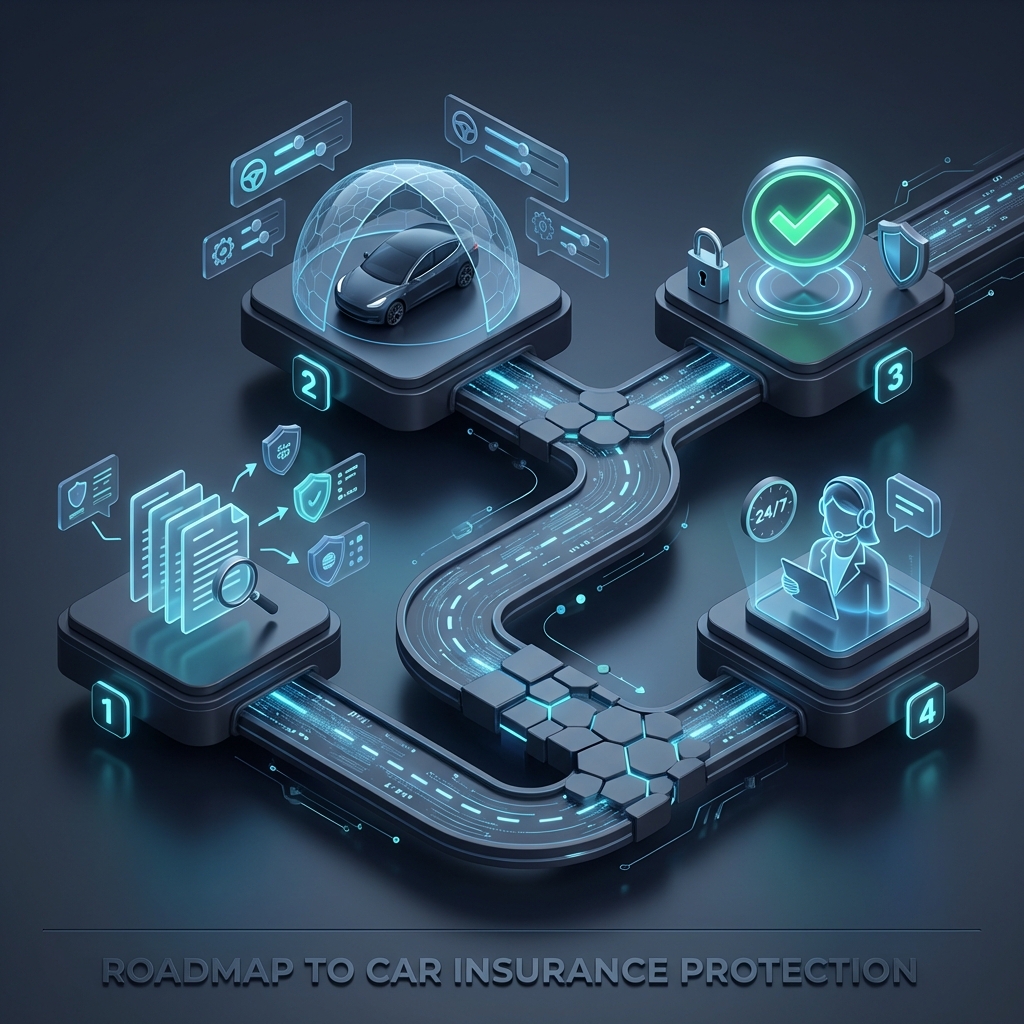
Chapter 5: The Smart Shopper's Guide to Buying Insurance
Now that you understand the components and pricing, you can shop for insurance like an expert. Following a structured process is the key to finding the best possible value.
Step 1: Assess Your Coverage Needs
Don't just default to the state minimum. Consider your assets. Do you own a home? Have significant savings? You need enough liability coverage to protect those assets from a lawsuit. Consider the value of your car to decide if collision and comprehensive are necessary.
Step 2: Gather Your Information
Before you start getting quotes, have all necessary information handy for every driver and vehicle on the policy. This includes driver's license numbers, vehicle identification numbers (VINs), and your current policy's declarations page.
Step 3: Compare, Compare, Compare
This is the single most important step for saving money. Get quotes from at least 3-5 different insurance companies. Prices for the exact same coverage can vary by hundreds or even thousands of dollars per year. Use a mix of online quote comparison tools, direct insurer websites, and independent insurance agents.
Step 4: Ask for Every Possible Discount
When getting a quote, actively ask about all available discounts. Common ones include:
- Multi-Policy (Bundling): Combining auto with home or renters insurance.
- Good Driver: For a clean record over the past 3-5 years.
- Good Student: For young drivers with good grades.
- Safety Features: For anti-lock brakes, airbags, anti-theft systems, etc.
- Paid-in-Full: For paying your entire premium upfront.
Step 5: Research Company Reputation
The cheapest policy isn't the best if the company has terrible customer service. Before you buy, check company ratings from sources like J.D. Power for claims satisfaction and A.M. Best for financial stability.
Chapter 6: Navigating the Claims Process Like a Pro
An accident is stressful, but understanding the claims process beforehand can provide immense clarity and reduce anxiety.
Immediately After the Accident
Your priorities are safety and documentation. Get to a safe location, call 911, exchange information (but do not admit fault), and take extensive photos of the scene and all vehicle damage.
Filing the Claim
Notify your insurance company as soon as possible. Most insurers have 24/7 claims hotlines and mobile apps that make it easy to start the process. You will be assigned a claim number and an "adjuster."
Working with the Adjuster
The claims adjuster is the person who will investigate the accident, determine fault, and assess the damages. They will review the police report, photos, and statements from everyone involved. Be cooperative and truthful. The adjuster will then provide an estimate for the repairs.
The Repair and Payout Process
You generally have the right to choose your own repair shop, though your insurer may have a network of pre-approved shops that can streamline the process. The insurance company will typically pay the shop directly, minus your deductible. If your car is declared a "total loss," the insurer will pay you its actual cash value (ACV), minus your deductible.
Related reading from our blog
Conclusion: Driving Forward with Confidence
You have now journeyed through the entire world of car insurance, from foundational concepts to the practical steps of buying a policy and filing a claim. The complexity has been broken down, the jargon has been translated, and the path forward is clear. Car insurance is not just a legal requirement; it is a vital tool for your financial health and peace of mind.
Armed with the knowledge from this guide, you are no longer a passive passenger in your insurance journey. You are in the driver's seat, equipped to ask the right questions, select the right coverages, and find the best value for your hard-earned money. Drive safely, shop smartly, and move forward with the confidence that you are truly protected.
Guide Complete & Verified for 2026