How to shop for a car that may be cheaper to insure
The simple answer
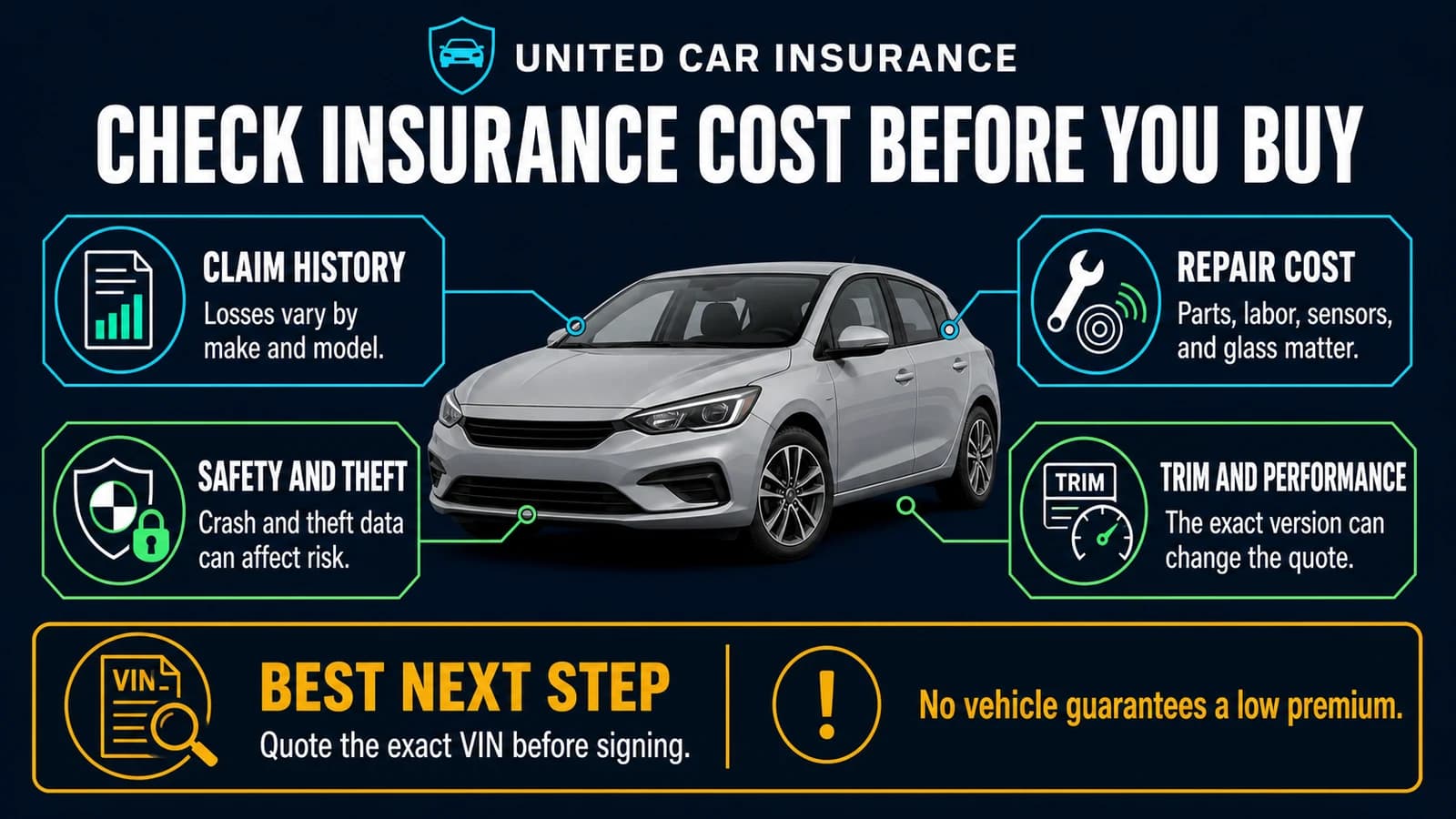
There is no single cheapest car to insure for every driver. The useful approach is to shortlist practical vehicles with favorable insurance loss experience, manageable repair costs, strong safety ratings, low theft concerns, and the features you need - then request matching quotes for the exact model year, trim, VIN, drivers, and location before buying.
Bottom line
The cheapest car to insure is the one that produces the best real quote for your household, not the one at the top of a generic list.
A real-world example
Two $30,000 cars can quote differently
- 1.Vehicle A has expensive lighting and sensor calibration after a minor impact.
- 2.Vehicle B has better collision loss experience and widely available parts.
- 3.The same driver requests matching coverage quotes for both VINs.
Vehicle B may quote lower, but the result depends on the insurer, location, trim, theft experience, driver, coverage, and discounts. Get the quotes before signing the purchase contract.
See the difference
Traits worth checking
- HLDI insurance loss results
- NHTSA and IIHS safety information
- Theft and key-security concerns
- Parts, labor, glass, and calibration cost
- Power, trim, and vehicle value
- Real VIN-specific insurance quotes
Do not assume
- xFive safety stars guarantee a discount
- xEvery trim of a model costs the same
- xA hybrid or EV is always higher or lower
- xAn older car is automatically cheaper
- xA generic national average predicts your price
- xOne insurer will be cheapest for everyone
Insurance words translated
Three terms to know
- Insurance loss result
- Model-level claim frequency or cost compared with similar vehicles under a specific coverage.
- Trim
- A version of a model with different equipment, power, value, wheels, lights, sensors, or repair cost.
- VIN-specific quote
- A quote using the exact vehicle identification number, which can be more precise than model name alone.
Plain-English guide 1
Start with insurance loss experience
The Highway Loss Data Institute publishes loss results by make and model for collision, property damage liability, comprehensive, injury, PIP, and MedPay coverages. Better results can be a useful shortlist signal.
Compare vehicles within similar classes and sizes. Past model results are informative, not a guaranteed future premium.
Related guidance: Compare coverage costs for electric vehicles
Plain-English guide 2
Use safety ratings correctly
NHTSA and IIHS ratings help evaluate crash protection and crash avoidance. They are safety tools, not direct insurance price lists.
NHTSA cautions that some frontal ratings should be compared among vehicles of similar weight. A high rating can coexist with expensive parts or sensors.
Related guidance: Review insurance considerations for new drivers
Plain-English guide 3
Look beyond the model name
Large wheels, performance engines, specialty lights, panoramic glass, cameras, radar units, and advanced driver-assistance sensors can change repair cost. Theft experience and security equipment also matter.
Ask for quotes on the exact trim or VIN. A base model and performance trim can produce different prices.
Related guidance: Understand coverage for classic and collector cars
Plain-English guide 4
Build a quote-first shortlist
Choose three to five vehicles that meet your needs. Get matching insurance quotes for each before committing to the purchase.
Compare the total ownership picture: purchase price, financing, fuel or charging, maintenance, taxes, depreciation, and insurance. A slightly cheaper premium does not rescue an unsuitable or unreliable vehicle.
Related guidance: See how comprehensive and collision protect the vehicle
Plain-English guide 5
A practical shortlist method
Start with non-performance versions of widely sold sedans, hatchbacks, minivans, or compact and midsize crossovers. Then check model-specific loss and safety data and obtain real quotes.
We do not label individual vehicles universally cheapest because driver and location differences can overwhelm a national model average.
What to do next
Before buying the car
- 1Choose three to five exact model and trim candidates.
- 2Check HLDI loss results and NHTSA/IIHS safety information.
- 3Review open recalls and theft or security concerns.
- 4Request matching quotes using exact VINs when possible.
- 5Add insurance to the full ownership-cost comparison.
Understand how vehicle choice changes price
Review repair cost, theft, safety, value, and trim factors before narrowing the shortlist.
Open the vehicle-cost guideImportant limits
Model lists become outdated and cannot predict an individual premium. Verify current ratings, recalls, loss information, availability, and quotes for the exact vehicle.