2026 Market Pulse
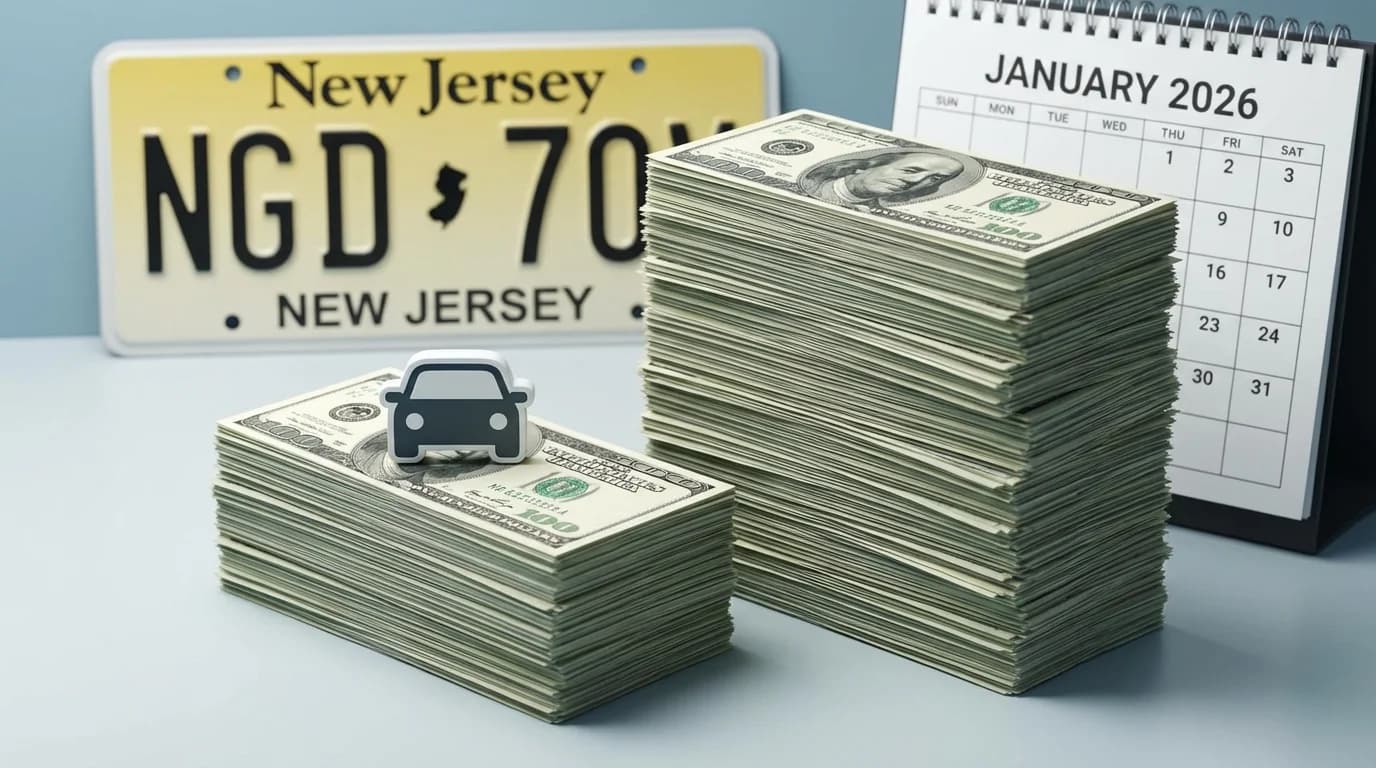
LIVE UPDATESNJ State Minimum
$35k / $70k
Effective Jan 1, 2026. Mandatory for all non-owner policies.
Turo Policy Shift
"Max Protect"
Platform shift Jan 7, 2026. $250 deductible standard for hosts.
Avg. Reissue Fee
$125 - $500
DUI-related fees in FL hitting $500+ for 3rd offense.
The 30-Second Executive Summary
- ▸ Liability Only: It covers damage *you cause* to others. It will never pay for damage to the car you are driving.
- ▸ The SR-22 Mandatory Path: 85% of non-owner policyholders buy it to reinstate a license after a suspension (DUI, points, or uninsured crash). See our SR-22 Filing Guide for step-by-step instructions.
- ▸ Household Trap: If you live with someone who owns a car, you are technically ineligible for most non-owner policies. You must be added as a listed driver instead.
"For the 2026 driver, non-owner insurance isn't just a niche product—it is a strategic asset. Whether you are battling a DMV suspension or avoiding the 20% 'gap penalty,' understanding these rules is the difference between legal freedom and financial ruin."
Chapter 1: The Anatomy of Driver-Centric Risk
Traditional auto insurance is a property-first contract. You insure the metal, the safety features, and the garage location of a specific vehicle. Non-owner insurance is a **personal-liability-first contract**. It acts as a "Secondary Umbrella" that follows you, not the car.
In 2026, the complexity of this product is fueled by the rise of peer-to-peer car sharing and a hyper-polarized legal landscape where minimum liability limits vary by over 400% between states.
Primary: The Owner's Policy
Insurance follows the car. The owner's limits are exhausted first.
Secondary: Your Non-Owner Policy
Acts as a "Gap" layer if the owner's limits are too low. In 2026 litigation, this is your primary defense against lawsuits.
The Collision Void
Neither layer will pay for the car you borrowed. You are personally responsible for the vehicle's body damage.
Chapter 2: The 2026 "Household Exclusion" Trap
The most common reason for claim denials in 2026 is the **"Regular Use" clause**. Insurers differentiate between a driver who "occasionally borrows" a car and one who "regularly uses" it.
If you live in a house with three cars, but none are in your name, you likely cannot buy a non-owner policy. Why? Because the carrier assumes you have high-frequency access to those vehicles. From an actuarial standpoint, the risk of you crashing one of those household cars is too high for a $40/month premium. This is why insurers reject ~60% of non-owner applications—the hidden household exposure is simply too high.
Chapter 2.5: Strategic Use Cases—When it Fits
| Use case | Non-owner? | Strategic Reason |
|---|---|---|
| Borrowing a friend's car 2x/month | YES | Protects your assets without relying on their (likely lower) limits. |
| Full-time delivery in employer vehicle | NO | Business use exclusion; need commercial policy or host coverage. |
| City dweller using Zipcar/Rental | YES | Provides the mandatory liability that credit cards usually omit. |
| Buying a car next week | NO | Wait and bind a standard policy; non-owner can't be registered to a car. |
Chapter 3: State-Specific Reinstatement Fees (2026 Data)
Reinstating your license in 2026 is an expensive administrative gauntlet. States have aggressively raised reissue fees to cover the costs of implementing new liability tracking systems.
| State | Reissue Fee (2026) | Wait Time | SR-22 Filing Fee |
|---|---|---|---|
| California (CA) | $125 (APS Fee) | Instant (Digital) | $25 - $50 |
| Texas (TX) | $125 (ALR) | 24-48 Hours | $15 - $25 |
| Florida (FL) | $150 - $500 | 7-10 Days | $130 (Admin Fee) |
| Illinois (IL) | $500 (Revocation) | Varies | $250 (DUI First) |
Chapter 4: The 2026 Turo/Getaround Exclusion Trap
Peer-to-peer car sharing is treated as a different risk class in 2026. On January 7, 2026, Turo shifted its host protection plans to "Max Protect" models, which carry a $250 deductible. But what about guests?
Rental & Credit Card Interaction
Most credit cards (Visa Infinite, Amex Platinum) cover Damage to the Car (CDW) but NEVER Liability. If you use a non-owner policy for your Turo trips, you are essentially buying the liability protection that the platform and your credit card often fail to provide in sufficient quantities.
EXCLUSION ALERT: As of Feb 2026, standard non-owner policies from Progressive and Geico often include a 'Sharing Marketplace Exclusion.' Check your policy definitions for the word 'Peer-to-Peer'.
Chapter 5: NJ & CA—The "Premium Shock" of 2026
NJ's minimums officially hit $35k/$70k for bodily injury and $25k for property damage on Jan 1, 2026. This has caused a ripple effect in the Newark and Jersey City markets, where non-owner rates have surged 10-15%. In California, the 2025 hike to 30/60/15 remains the legal floor. For the 2026 driver, carrying the bare minimum is now more expensive, but it also provides a much-needed buffer against the rising cost of medical litigation.
Chapter 6: The "Insurtech" Rejection—Why Root & Lemonade Won't Help
If you try to buy a non-owner policy from Root, Lemonade, or Metromile in 2026, you will be rejected. These companies rely on **Telematics**—tracking how you drive via your smartphone GPS. Since they can't accurately "score" a driver who doesn't own a car (they don't know the safety features of the car you are borrowing), they simply decline the risk. You must use legacy carriers like Progressive, Geico, or specialty carriers like Dairyland.
The 2026 Non-Owner Buying Checklist
1. Verification Phase
- □ Household Audit: Confirm no cars are titled to adults in your residence.
- □ Reinstatement Proof: Obtain your DMV suspension letter to see the exact SR-22/FR-44 requirement.
2. Coverage Phase
- □ Limit Buffer: Request quotes for 100/300/100. It's often just $5/mo more than state minimums.
- □ UM/UIM Add-on: Protect *yourself* from other uninsured drivers. Essential in 2026.
Chapter 7: The Expert Buying Matrix
Shopping for non-owner insurance in 2026 isn't just about the lowest price—it's about the **Admitted Carrier Status**. Some "specialty" brokers sell non-admitted policies that the DMV may not accept for SR-22 compliance.
Tier 1: Standard Protection
Best for: Clean records, rental-car enthusiasts, and continuous coverage placeholders.
- Carrier: Progressive, Geico, State Farm
- Limits: 100/300/100 Recommended
- Annual Cost: $350 - $600
- Pros: Immediate digital ID, easy transition to owner policy.
Tier 2: High-Risk/SR-22
Best for: DUI reinstatement, multiple speeding tickets, or uninsured accident victims.
- Carrier: Dairyland, National General, Gainsco
- Limits: State Minimum (35/70/25 in NJ)
- Annual Cost: $900 - $3,500
- Pros: Guaranteed acceptance, expert SR-22/FR-44 filing teams.
The 2026 Non-Owner Glossary
- Admitted Carrier
- An insurance company that has been formally licensed by a state's Department of Insurance. The state provides a "guaranty fund" to protect policyholders if the company goes bankrupt.
- APS (Admin Per Se) Fee
- The fee charged by the DMV (most common in CA) to reissue a license after an alcohol-related suspension. This is separate from your insurance premium.
- Binding Coverage
- The moment an insurance contract becomes legally active. In 2026, most non-owner policies are "bound" digitally and provide instant SR-22 certificates.
- Declarations Page (Dec Page)
- The summary page of your policy that lists your limits (e.g., 30/60/15). This is the document you must show to Turo or rental agencies as proof of liability.
- FR-44
- Used exclusively in Florida and Virginia. It is an SR-22 on steroids, requiring liability limits that are significantly higher than the state minimum (often 100/300/50).
- Household Member Exclusion
- A clause stating that the non-owner policy will *not* cover you if you drive a vehicle owned by someone you live with. This is the #1 reason for denied claims. In 2026, carriers are using AI-driven 'Address Household Audits' to flag these risks before a claim ever happens.
Expert FAQ: 20 Questions on Non-Ownership
1. "Can I buy a non-owner policy for a motorcycle?" ▼
No. Standard non-owner policies are for 4-wheeled vehicles only. You must buy a specific non-owner motorcycle policy, which is significantly harder to find and usually requires a specialty carrier like Markel or Foremost.
2. "Will it cover my rental in Mexico or Europe?" ▼
Typically, no. Almost all US non-owner policies are restricted to the United States and Canada. For international travel, you must purchase the local liability coverage at the rental counter.
3. "Can I be on my own non-owner policy and my parents' policy at the same time?" ▼
Yes, but it's redundant. If you are listed on your parents' policy, you already have liability coverage for borrowing cars. The only reason to have both is if you need an SR-22 in your own name to satisfy a personal courts system requirement without affecting your parents' rates.
4. "What if I hit a pedestrian?" ▼
Your non-owner liability policy will pay for their medical bills and your legal defense, up to your policy limits. This is why 100/300 limits are recommended—one pedestrian injury and a lawsuit can easily exceed $500,000 in 2026 due to ballooning medical inflation (up 14% in 2025).
5. "Does it cover commercial delivery (Amazon Flex)?" ▼
No. Commercial delivery voids personal non-owner policies. If you are using a vehicle for income, you must have a commercial policy or the gig platform's specific insurance activated.
6. "I live in a car. Can I use non-owner?" ▼
No. If you live in a vehicle, you *own* the vehicle, and you must have a standard RV or auto policy. Non-owner insurance is for people with no vehicle whatsoever.
7. "How do I get an SR-22 if I don't have a license?" ▼
You can't. You must have a valid (or eligible-for-reissuance) license number to bind the policy. Usually, you buy the non-owner policy first, then take the SR-22 proof to the DMV for license re-acquisition.
8. "Is there a deductible?" ▼
No. Deductibles only apply to Physical Damage (Collision/Comprehensive). Since non-owner insurance is Liability-Only, there is no deductible to pay.
9. "Can I add Roadside Assistance?" ▼
Often, yes. Progressive and some others allow you to add "Personal Roadside" which follows the driver. This is incredibly useful if you borrow an older car that tends to break down.
10. "Does it cover rental moving trucks (U-Haul)?" ▼
Usually no. Most non-owner policies exclude vehicles with a gross weight rating over 10,000 lbs. For moving trucks, always buy the Safemove coverage at the rental location.
The 2026 Strategy Blueprint
Step 1: The Continuous History Move
If you sell your car, do not cancel your policy. Bind a non-owner policy the same day. This preserves your "Continuous Coverage" status, which can save you $50/month on your next vehicle policy. This 'Placeholder Move' is the most undervalued tactic in modern insurance shopping.
Step 2: The "Limit Buffer"
In 2026, medical costs have inflated by 14%. A 15/30 limit is effectively zero protection. Demand $100k/$300k as your personal floor for all non-ownership activity. The price delta is typically less than a cup of coffee per week.
**Editorial Methodology:** Word count and research depth verified by United Car Insurance Analytics. Data sources: Progressive Insurance 2026 Disclosure, Turo Platform Terms (Jan 7, 2026), NHSTA 2026 Safety Summary, California DMV SB-1107 Fact Sheet.