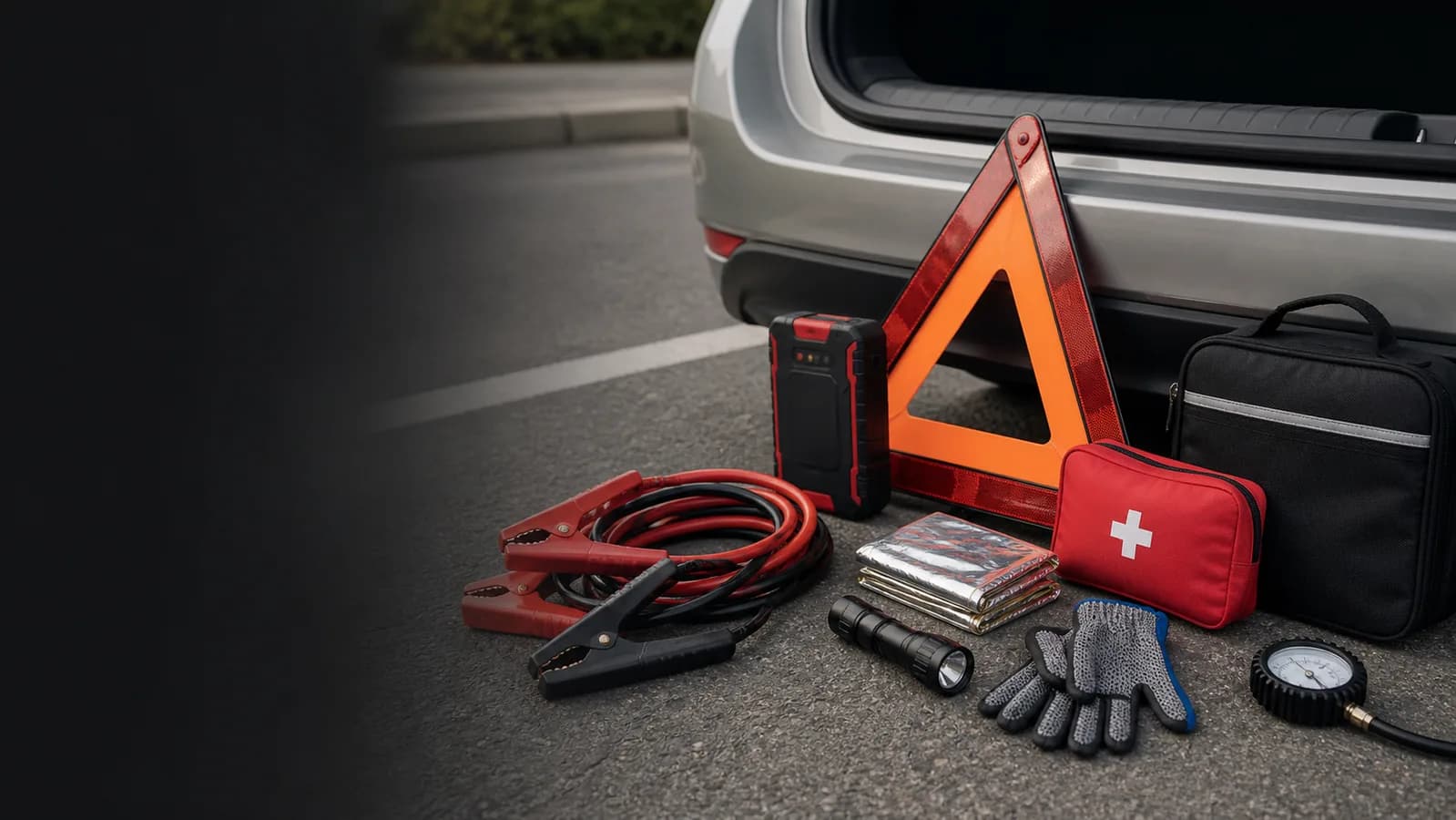
Battery backup
Best Portable Jump Starters: 3 Options by Vehicle Size
A portable jump starter can get a compatible vehicle moving without a second car, but only when it is charged, connected correctly, and suitable for the engine and battery condition.
- Published
- Aug 10, 2026
- Reviewed
- Aug 10, 2026 by United Car Insurance Editorial Team
Comparison at a glance
| Product | Best for | Key fit | Important limit | Product link |
|---|---|---|---|---|
| NOCO Boost GB40 | Most cars and smaller SUVs | Compact format | Not intended for engines beyond listed guidance | View on Amazon |
| NOCO Boost GB50 | Larger engines and added reserve | Higher stated engine range | Larger than the GB40 | View on Amazon |
| GOOLOO GP4000 | Drivers comparing a high-output alternative | High listed peak output | Peak-amp labels are not directly comparable across brands | View on Amazon |
Choose by driving situation
The strongest choice depends on how and where the equipment will be used. Start with the situation, then compare features.
| Your situation | Prioritize | Avoid |
|---|---|---|
| Compact gas car | Smaller unit within documented engine range | Overspending on capacity with no practical benefit |
| Large SUV or diesel | Explicit engine-size and cold-weather compatibility | Comparing peak amps without engine guidance |
| Infrequent driver | Low self-discharge and clear recharge reminders | Leaving the unit unchecked for a year |
| Multiple family vehicles | Compatibility with the largest engine and shared instructions | Assuming one unit supports every battery voltage |
Editorial analysis
Engine-size guidance matters more than headline peak amps
Peak-amp numbers are difficult to compare across brands because test methods and marketing conventions vary. Start with the manufacturer's stated gasoline and diesel engine range, battery voltage, temperature guidance, and minimum charge requirement.
Cold weather, battery age, engine condition, oil viscosity, and repeated attempts all affect performance. Buying more capacity can add reserve, but it does not make a unit compatible with a damaged, frozen, leaking, or incorrect-voltage battery.
A jump starter is only useful if charged. Choose a model with an obvious status indicator, add recharge dates to the emergency-kit review, and keep the cable and manual with the unit instead of separating them in the trunk.
How we selected these options
We evaluated the products against the job this guide is meant to solve. The list is a decision shortlist, not a claim that one product is universally best.
- Manufacturer-stated engine compatibility.
- Clamp design and listed safety protections.
- Portability and storage practicality.
- Charging and status visibility.
- Usefulness without exaggerated peak-amp comparisons.
Our three practical picks
Pick 1 · Most cars and smaller SUVs
NOCO Boost GB40
A compact 1000-amp-rated unit listed for gasoline engines up to 6.0 liters and diesel engines up to 3.0 liters.
- Listed output
- 1000 amps
- Gas engines
- Up to 6.0L
- Diesel engines
- Up to 3.0L
- Extras
- Light and USB power
Where it fits
- Compact format
- Clear engine-size guidance
- Integrated safety features
Limitations to know
- Not intended for engines beyond listed guidance
- Must be stored and recharged correctly
Compatibility: Check exact vehicle and battery requirements; manufacturer lists up to 6.0L gas and 3.0L diesel.
Check product on Amazon →Pick 2 · Larger engines and added reserve
NOCO Boost GB50
A 1500-amp-rated model listed for gasoline engines up to 7.0 liters and diesel engines up to 4.5 liters.
- Listed output
- 1500 amps
- Gas engines
- Up to 7.0L
- Diesel engines
- Up to 4.5L
- Extras
- Light and USB power
Where it fits
- Higher stated engine range
- Portable case design
- Built-in light and USB power
Limitations to know
- Larger than the GB40
- Extra capacity is unnecessary for some vehicles
Compatibility: Manufacturer lists up to 7.0L gas and 4.5L diesel; confirm battery voltage and instructions.
Check product on Amazon →Pick 3 · Drivers comparing a high-output alternative
GOOLOO GP4000
A high-output portable starter marketed for a broad range of gas and diesel vehicles, with USB power and an integrated light.
- Listed peak output
- 4000 amps
- Power bank
- USB device charging
- Roadside use
- Integrated light
- Fit check
- Confirm current engine guidance
Where it fits
- High listed peak output
- Accessory charging
- Roadside light
Limitations to know
- Peak-amp labels are not directly comparable across brands
- Confirm current engine and temperature guidance
Compatibility: Use only within the current manufacturer compatibility and battery-voltage instructions.
Check product on Amazon →Setup and ownership plan
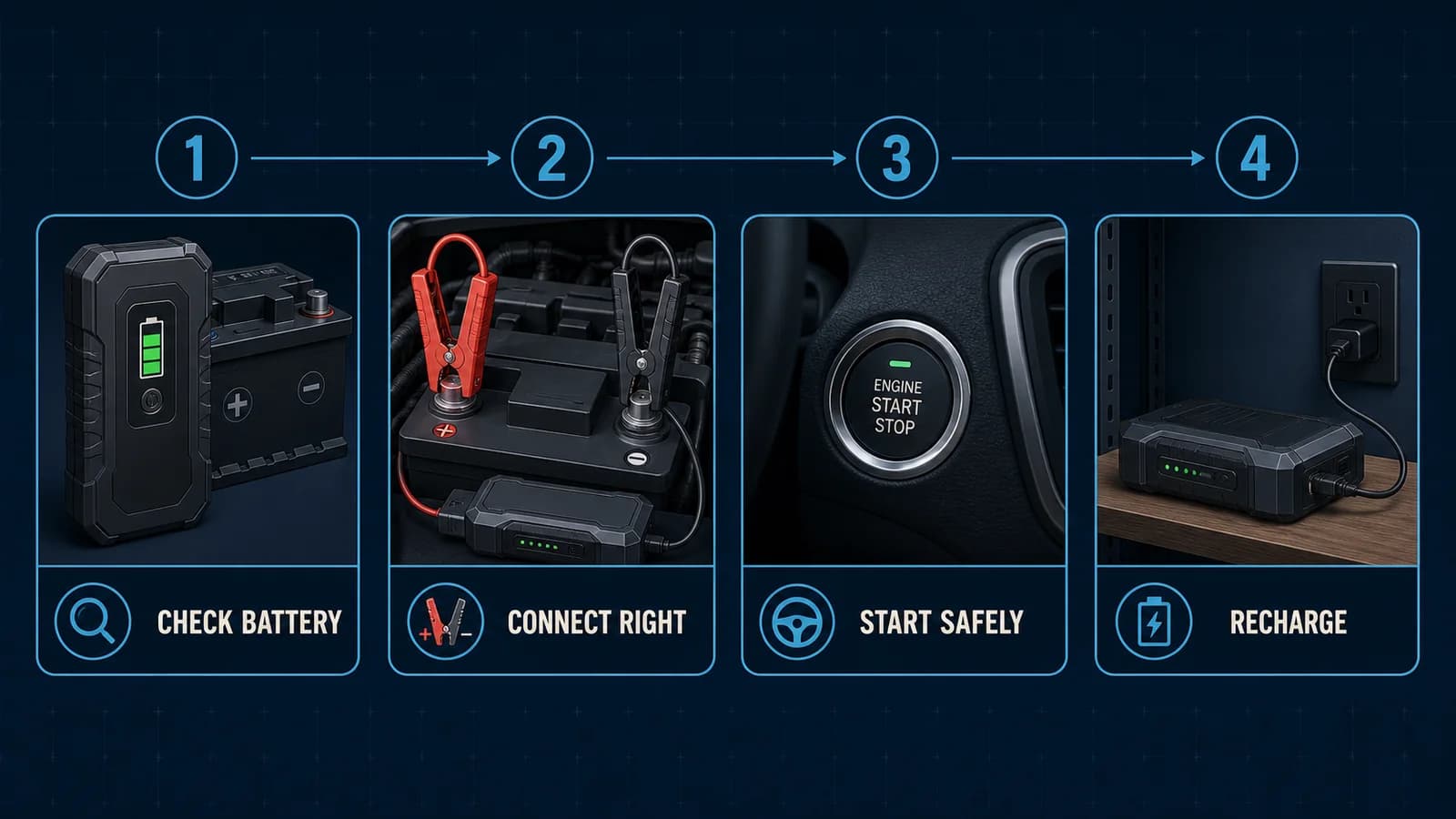
- 1
Read both manuals
Confirm connection points, battery voltage, grounding instructions, and the allowed attempt sequence.
- 2
Inspect the battery
Do not connect to a frozen, swollen, leaking, cracked, or otherwise damaged battery.
- 3
Connect deliberately
Confirm polarity and secure clamp contact before enabling the jump starter.
- 4
Recharge after use
Restore charge promptly and check it before long trips or seasonal temperature changes.
Questions to answer before checkout
- What engine sizes and battery voltage are documented?
- What temperature range applies?
- Does it show state of charge clearly?
- Are replacement cables available?
- What reverse-polarity and overload protections are listed?
Common buying mistakes
- Buying by peak amps alone
- Connecting to a damaged battery
- Making repeated start attempts beyond manual limits
- Forgetting to recharge after USB or flashlight use
Buying checklist
- Verify gas or diesel engine size.
- Read the vehicle and jump-starter manuals before first use.
- Recharge the unit on the manufacturer schedule.
- Inspect cables and clamps for damage.
- Do not jump a frozen, leaking, swollen, or visibly damaged battery.
Frequently asked questions
How many amps does my jump starter need?+
Use the manufacturer's engine-size and battery-voltage guidance instead of comparing peak-amp numbers alone.
How often should I recharge it?+
Follow the product manual and check status before long trips. Heat, cold, age, and accessory use can reduce stored charge.
Can I keep a lithium jump starter in the car?+
Only within the manufacturer's storage-temperature guidance. Avoid prolonged extreme heat and inspect the case for swelling or damage.
Why will my jump starter not start the car?+
Possible causes include poor clamp contact, insufficient charge, a battery outside operating limits, another vehicle fault, or an incompatible engine size.
Does jump-starting fix the battery?+
No. It only provides temporary starting current. The battery and charging system may still need testing or replacement.